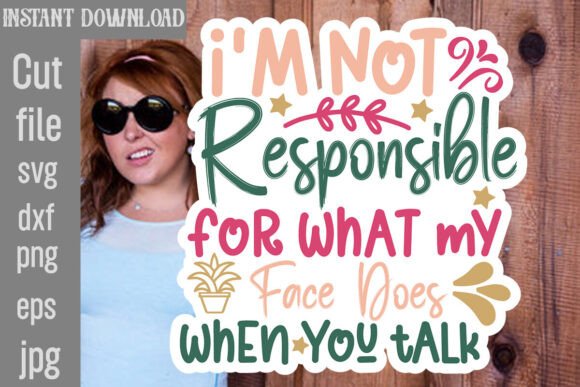
I m Not Responsible for What My Face Does
When I first opened the file for I m Not Responsible for What My Face Does, I immediately thought about the chaotic energy of a craft fair or a busy Etsy shop. This isn't just another generic phrase; it is a design asset that carries a specific mood. It feels rebellious, witty, and unapologetically human. As an experienced designer who has stitched thousands of designs on everything from delicate baby rompers to heavy-duty work aprons, I know that the success of a project often hinges on whether the text lands correctly in the hoop. This review looks at how this digital download performs when moved from a screen to actual thread.
The First Stitch: Visual Personality and Mood
The visual personality of I m Not Responsible for What My Face Does is its strongest selling point. It creates an instant connection with anyone who appreciates humor mixed with a touch of self-deprecation. In terms of layout, the design needs to balance readability with attitude. When I imagine stitching this, I see it working best as a statement piece rather than a subtle accent. The phrase suggests a narrative, making it perfect for custom apparel where the wearer wants to set a tone before they even speak.
The design fits naturally into the Crafts category, specifically within Graphics intended for embroidery. It bridges the gap between a simple text file and a complete brand identity. For a small business owner, this design offers a ready-made voice. It transforms a plain tote bag or a standard sweatshirt into a conversation starter. The visual weight of the letters must be considered; if the font is too thin, it might get lost in the fabric texture, but if it is bold enough, it commands attention. This is the kind of design that makes customers pause and smile, increasing the perceived value of the finished product.
Real-World Application: From Digital File to Finished Product
Let me take you through a real scenario I recently faced while preparing for a holiday boutique sale. I needed a unique item that wouldn't look like every other mass-produced gift on the market. I decided to use I m Not Responsible for What My Face Does on a set of high-quality kitchen towels and embroidered patches for a limited run of tote bags. The goal was to create items that felt personal yet professional.
On the kitchen towel, the design acted as a humorous warning label. The contrast of the white thread against a dark linen background made the message pop. However, on the tote bag, which had a textured canvas surface, I had to adjust my approach. The roughness of the fabric meant that fine details could get lost. I opted for a slightly larger stitch density to ensure the text remained crisp. The result was a product that customers loved because it felt authentic. They didn't just buy a bag; they bought a piece of personality. This design works exceptionally well for personalized gifts because it resonates with people who value individuality.
In the realm of custom apparel, this phrase shines on hoodies and sweatshirts. It adds a layer of relatability that plain logos cannot achieve. For small shop products sold on platforms like Etsy, having a design that stands out visually is crucial. When a buyer scrolls through listings, a witty phrase like this can stop the scroll. It signals that the seller understands their audience. Whether used on a baby onesie for a parent with a sense of humor or on a cap for a festival-goer, the versatility of I m Not Responsible for What My Face Does is impressive.
Technical Considerations and Potential Pitfalls
While the concept is strong, execution requires technical precision. One area where designers must exercise caution is the hoop size. If you attempt to stitch this on a very small hoop, such as those used for tiny accessories, the lettering might become cramped. The spacing between characters is vital for readability. On curved surfaces like caps, the distortion of the text can be tricky. You need to ensure the curve of the hat aligns with the natural flow of the letters so the message doesn't look warped.
Fabric choice plays a massive role in the final outcome. On stretchy fabrics, the tension of the satin stitch or fill stitch can cause puckering. If you are working with thin fabric, you will need a high-quality stabilizer to support the design. Without proper backing, the weight of the thread could pull the material out of shape. Similarly, on dark fabrics, the thread color selection becomes critical. A light thread on a dark background ensures the message is legible, whereas a low-contrast combination might render the design invisible after washing.
Dense stitch areas can also be problematic. If the design includes intricate decorative accents alongside the text, the needle count might become too high for certain machines or fabrics. Always check the stitch density before committing to a large production run. For commercial embroidery projects, consistency is key. You want every unit to look identical, so testing your setup on scrap fabric is non-negotiable.
Design Assets and Professional Standards
As a designer, I always evaluate whether a file is ready for commercial use. The download package for I m Not Responsible for What My Face Does includes essential formats like SVG, DXF, EPS, and PNG. These design assets allow for flexibility in how you prepare your files for different machines. However, it is important to verify the specific requirements of your embroidery machine software. Some older models may struggle with complex vector paths, so converting the file to a format compatible with your specific hardware is a smart move.
The inclusion of a 300 DPI transparent PNG is particularly useful for creating printable mockups. Before you invest time in stitching, you can visualize the design on various backgrounds using these graphics. This step helps in planning the thread colors and ensuring the design fits the aesthetic of your brand. For Etsy sellers and digital product sellers, having high-quality previews can significantly boost sales by giving buyers a clear idea of what they are purchasing.
When considering embroidery project longevity, think about how the design will hold up over time. Frequent washing can fade threads or loosen stitches if the density is too high. For items like holiday embroidery gifts or wedding gifts, durability is a major factor in customer satisfaction. A design that looks great initially but falls apart after a few washes damages your reputation. Therefore, inspecting the finished product for stability is part of the quality control process.
Final Thoughts for the Creative Entrepreneur
I m Not Responsible for What My Face Does is more than just a string of text; it is a tool for expression. It allows creators to inject humor and character into their handmade products. Whether you are decorating a nursery, creating merchandise for a craft business, or designing a unique embroidered patch, this design offers a solid foundation. However, success lies in the details. Test your stabilizer choices, double-check your machine compatibility, and always prioritize clarity over complexity.
For those looking to expand their inventory, this design provides a reliable option that appeals to a wide demographic. It fits seamlessly into boutique branding and adds a touch of wit to any apparel decorator's collection. By understanding the nuances of how it behaves on different materials and respecting the technical limitations of embroidery, you can turn this digital file into a profitable and beloved physical product. Remember, the best designs are not just seen; they are felt and understood. With careful planning, I m Not Responsible for What My Face Does can become a staple in your creative toolkit.